LMS Dubai: How to Choose a Learning Management System That Fits Your Workforce, Not Just a Feature List
What Is a Learning Management System, and How Does It Work?
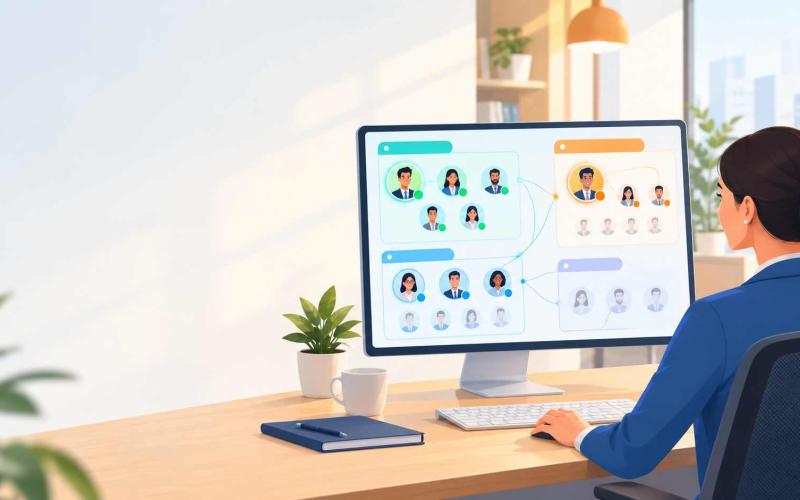
A Learning Management System (LMS) is software for creating, delivering, assigning, and tracking training from one central place. Administrators upload or build courses, enroll learners, set deadlines, and monitor progress. Employees log in to take courses, complete assessments, and view their records.
Behind that simple description sit several connected functions: content management, user management, enrollment rules, assessment engines, certification records, and reporting. In a corporate setting, the platform may be called an employee learning platform, a training management system, or corporate LMS software. The label matters less than what the system does for your training operation.
Why Organizations in Dubai and the UAE Use an LMS
Dubai's workplaces have particular training pressures. Teams often include employees from many countries, with different first languages and educational backgrounds. Companies run across multiple sites, shifts, and sometimes emirates. Staff turnover and rapid hiring can make onboarding a constant activity rather than an occasional one.
A Learning Management System in the UAE gives these organizations consistency. Every new hire receives the same induction content, every department can be assigned its required courses, and HR can see who has finished what without collecting updates by email.
Practical Use Cases That Go Beyond "Online Courses"
The strongest LMS implementations solve specific problems:
- Employee onboarding: Structured learning paths guide new joiners through policies, systems, and role expectations in a consistent order.
- Compliance training: Mandatory modules can be assigned, tracked, and refreshed on a schedule, with a record of completion for internal review or audit.
- Health and safety training: Site-based staff can complete short modules and assessments, with records kept centrally.
- Sales and product training: Distributed teams can learn about new offerings at the same time rather than waiting for a workshop.
- Leadership and professional development: Blended programs can combine e-learning, workshops, and manager check-ins.
- Certification management: Expiry dates and renewal reminders reduce the risk of lapsed qualifications going unnoticed.
A note on regulation: some UAE sectors have official training or licensing requirements, and these differ by industry and authority. Whether training is mandated by a regulator, such as KHDA or the Ministry of Education for education providers, or is simply internal corporate practice, should be confirmed with the relevant official source. An LMS is a tool for delivering and documenting training. It is not, by itself, a legal requirement.
Capabilities That Matter, and the Problems They Solve
Rather than a checklist, consider each feature as an answer to a problem.
Learning paths and automated enrollment address the administrative burden of manually assigning courses. When a new employee joins a department, the right training can be assigned based on role.
Quizzes, assessments, and certification show whether learners engaged with the material, not just whether they opened it.
Reminders and overdue notifications help administrators manage recurring training without chasing people individually.
Instructor-led, virtual, and blended learning support lets a single platform handle classroom sessions, webinars, and self-paced content together.
Mobile learning matters for employees who are not desk-based, such as field teams, hospitality staff, or technicians.
Role-based access and employee self-service let managers see their teams' progress while learners access only what applies to them.
Dashboards and learning analytics give L&D teams visibility into participation, completion, assessment results, and overdue training.
Why HRMS Integration Deserves Attention
Training data and employee data should not live in separate worlds. When an LMS connects with your HR system, details such as department, job title, manager, and employment status can flow into the learning platform automatically. That keeps learner groups accurate, supports role-based assignment, and reduces manual updates.
This depends on clean source data. If job titles are inconsistent or departed employees remain active in the HR system, an integration will simply pass those errors along. Integration helps only when the underlying records are maintained properly.
This is where broader HR technology comes in. Providers such as Ensaan Technologies, which offers HR technology and workforce management solutions to organizations across the UAE and GCC, operate in the space where employee data, workforce processes, and employee development meet. For organizations pursuing digital HR transformation, that connection between people data and learning is worth considering early.
Dubai-Specific Considerations
Language. Many UAE workplaces need Arabic and English content, and sometimes additional languages. Check that the platform supports right-to-left display, bilingual interfaces, and multilingual content, not just translated menus.
Distributed teams. Employees may work in offices, warehouses, branches, or client sites. Cloud access and mobile compatibility become practical necessities.
Data security and privacy. Learner records are employee data. Ask vendors how data is hosted, who can access it, and how it is protected, and confirm the answers against your own policies and applicable UAE data protection requirements.
Scalability. A platform suitable for 150 employees should not struggle when the company reaches 1,500.
How to Choose an LMS in Dubai
Resist the temptation to pick the platform with the longest feature list. Unused features add cost, complexity, and training burden for administrators. Instead, work through these questions:
- Business requirements: What problem are you solving first: onboarding, compliance, product knowledge, or leadership development?
- Learner numbers and growth: How many users today, and how many in three years?
- Course formats and standards: Will you use SCORM or xAPI content, video, live sessions, or documents? Make sure the platform supports what you already have.
- Languages and mobile access: Test Arabic and English on actual devices your employees use.
- Integrations: Confirm HRMS compatibility and ask exactly how data is synchronized.
- Reporting and analytics: Can you produce the reports your managers and auditors actually need?
- Security and privacy: Request documentation, not just assurances.
- Implementation and support: Who configures the system, trains administrators, and responds when something breaks?
- User experience: If learners find it confusing, adoption will suffer regardless of capability.
- Total cost of ownership: Include licensing, setup, content development, integration, support, and administrator time.
A Hypothetical Example
Consider a Dubai-based company with 400 employees across operations, sales, finance, and customer service. This is an illustrative scenario, not a real case study. HR wants every new hire to complete a company induction and code-of-conduct module within their first two weeks, while operations staff need periodic safety refreshers.
With an LMS connected to the HR system, new employees could be enrolled automatically by department. Reminders would go out as deadlines approach, and HR could view overdue training from one dashboard. The platform does the administration. The quality of the induction content, and whether managers encourage completion, still determine whether anyone learns something useful.
Measuring What Matters
Completion rates are easy to report and easy to misread. A 100% completion figure says little if learners clicked through without engaging. More useful analytics look at assessment performance, repeated failures on specific topics, participation patterns, and overdue items alongside qualitative feedback from managers.
An LMS does not automatically improve performance or business results. Outcomes depend on content quality, instructional design, learner engagement, management support, and organizational culture. The platform makes learning easier to deliver and track. It cannot make poor content effective.
Emerging Developments Worth Watching
Several trends are shaping corporate learning, and each deserves a measured view:
- AI-assisted course creation can speed up drafting, but humans should review content for accuracy and relevance. It does not replace instructors or guarantee retention.
- Personalized learning and automated recommendations can suggest content based on role or activity, though they work best with good data and clear skills frameworks.
- Skills-based learning and Learning Experience Platforms (LXPs) focus on learner-driven discovery alongside formal assigned training.
- Virtual instructor-led training and mobile learning continue to support distributed teams.
- Integrated HR and learning platforms are making it easier to connect talent development with workforce data.
Before adopting any of these, ask what specific problem it solves for your organization.
The Right LMS Is the One That Fits
The best LMS Dubai organization is not necessarily the one with the most features. It is the one that fits your workforce, learning objectives, content, technology environment, compliance needs, budget, and long-term growth. Start with the training problem you need to solve, and the choice usually becomes much clearer.
Before publishing: confirm any sector-specific regulatory references against official UAE sources, and verify details about Ensaan Technologies directly with the company, since I kept that mention general rather than attributing specific features or results. I used no statistics, so there is nothing to source. The post runs close to 1,200 words, so trim a bullet or two if your publisher's limit is strict. I can also put this in a file if you'd like.