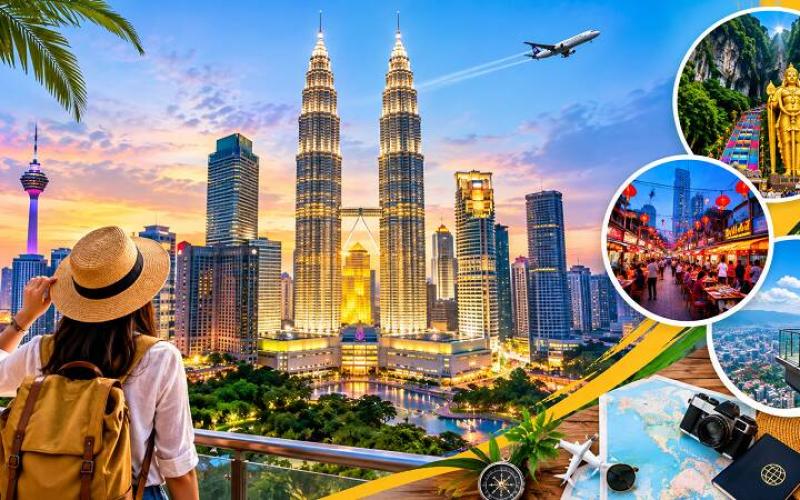
Kuala Lumpur Holiday Planning: Places, Experiences and Practical Tips
Kuala Lumpur is one of those cities that works for almost every kind of traveller — families, couples, solo explorers, and even short business-trip extensions. It mixes modern skyscrapers with old-world markets, and it's close enough to India that a full holiday fits comfortably into a short leave. If you're trying to figure out where to start, this guide walks through the practical side of planning a trip here, from visas to budgets to what's actually worth your time on the ground.
Malaysia's capital also works well as a base for exploring the wider region, since it connects easily to islands like Langkawi and Penang if you want to extend your trip. Many travellers looking at Malaysia Vacation Packages find that Kuala Lumpur pairs naturally with a beach extension, giving you both city energy and coastal downtime in a single itinerary.
Before booking anything, it helps to understand what kind of trip you're planning — a quick 3-4 day city break, or a longer regional trip combining KL with other Malaysian destinations. This guide covers both scenarios, along with the practical details that often get missed until the last minute: visa rules, weather timing, and realistic daily budgets.
Key Takeaways
- Kuala Lumpur is accessible for most Indian travellers with a visa-on-arrival or e-visa option, making planning relatively simple.
- The best time to visit is between December and February, when rainfall is lower and temperatures are more comfortable.
- A 4-5 day itinerary is usually enough to cover the city's main highlights without rushing.
- Public transport (LRT, Monorail, MRT) is efficient and affordable, reducing dependence on cabs.
- Food, transport, and mid-range stays make Kuala Lumpur one of the more budget-friendly international city breaks from India.
Why Kuala Lumpur Works as a Holiday Destination
Direct answer: Kuala Lumpur offers a rare combination of affordability, direct connectivity from India, and a mix of modern city experiences with cultural and natural attractions nearby — making it suitable for first-time international travellers and repeat visitors alike.
The city itself is compact enough to explore over a long weekend, but layered enough that a week doesn't feel like too much. You get the Petronas Towers and glass-fronted malls in one part of the city, and centuries-old temples or hillside caves within a short drive. This mix is a big reason KL consistently ranks among the top city-break destinations for Indian travellers exploring Southeast Asia.
Who Kuala Lumpur Suits Best
- Families — safe streets, stroller-friendly malls, and attractions like Aquaria KLCC and Petrosains
- Couples — rooftop dining, night markets, and scenic viewpoints
- Solo travellers — strong public transport and a well-established backpacker and mid-range hotel scene
- First-time international travellers — simple visa process and widely spoken English.
Best Time to Visit Kuala Lumpur
Direct answer: The ideal window to visit Kuala Lumpur is between December and February, followed by June to August, when rainfall is comparatively lower. Malaysia has a tropical climate, so some rain is expected year-round, but these months reduce the chances of prolonged downpours disrupting sightseeing.
| Season | Months | Weather | Best For |
| Peak Dry Season | December–February | Warm, lower rainfall | Sightseeing, outdoor activities |
| Shoulder Season | March–May | Hot, humid | Fewer crowds, better hotel rates |
| Monsoon Influence | June–August | Occasional showers | Indoor attractions, malls, theme parks |
| Wet Season | September–November | Heavy rainfall likely | Budget travel, off-peak deals |
Even during wetter months, Kuala Lumpur's malls, indoor theme parks, and covered markets mean a rainy afternoon rarely ruins a day's plan.
Visa and Entry Requirements for Indian Travellers
Direct answer: Indian passport holders typically need either an eVisa or a Malaysia Digital Arrival Card, and short-stay visa-free entry has been extended for Indian tourists in recent years under Malaysia's tourism push — though travellers should always verify current rules before booking, since policies can change.
Quick Entry Checklist
- Passport with at least 6 months' validity
- Confirmed return or onward flight ticket
- Proof of accommodation booking
- Sufficient funds proof, if requested at immigration
- Malaysia Digital Arrival Card filled before landing
- Travel insurance (recommended, not always mandatory).
Because entry rules for Indian travellers have shifted periodically, it's worth checking Malaysia's official immigration portal close to your travel date rather than relying on older information.
Top Places to Visit in Kuala Lumpur
Kuala Lumpur's attractions fall into a few clear categories — iconic landmarks, cultural sites, nature escapes, and shopping districts.
Iconic Landmarks
- Petronas Twin Towers — the city's most photographed structure, with a skybridge and observation deck
- KL Tower (Menara KL) — panoramic city views, slightly less crowded than Petronas
- Merdeka Square — colonial-era architecture and historical significance.
Cultural and Religious Sites
- Batu Caves — limestone caves with a giant golden statue and Hindu temple, a major pilgrimage and tourist site
- Thean Hou Temple — one of the largest Chinese temples in Southeast Asia
- Masjid Jamek — historic mosque at the confluence of two rivers.
Nature and Day-Trip Escapes
- Genting Highlands — hill station with a casino resort, theme parks, and cooler weather, roughly an hour from KL
- KLCC Park — green space right beside the Petronas Towers, popular for evening walks
- Bukit Nanas Forest Reserve — a small rainforest patch in the middle of the city.
Shopping and Nightlife
- Bukit Bintang — the city's main shopping and nightlife district
- Central Market — local crafts, souvenirs, and Malaysian street food
- Petaling Street — KL's Chinatown, known for night markets and bargaining culture
Food and Local Experiences
Direct answer: Kuala Lumpur's food scene reflects its multicultural population — Malay, Chinese, and Indian influences all show up strongly in everyday eating, making it one of the most diverse food cities in Southeast Asia.
- Nasi Lemak — Malaysia's unofficial national dish, coconut rice with sambal and sides
- Satay — grilled skewers, widely available at hawker stalls
- Banana Leaf Rice — a strong nod to KL's large Indian-origin population, especially around Brickfields
- Char Kway Teow — stir-fried noodles, a Chinese-Malaysian staple
- Hawker Centres — Jalan Alor is one of the most popular food streets for trying multiple dishes in one evening.
Vegetarian travellers from India will find Kuala Lumpur relatively easy to navigate, particularly in areas like Brickfields, often called "Little India," where South Indian and North Indian vegetarian food is widely available.
Budget Breakdown: What to Expect
Costs vary by travel style, but here's a realistic mid-range estimate for a solo traveller, in Malaysian Ringgit (RM) per day.
| Expense Category | Budget Traveller | Mid-Range Traveller |
| Accommodation | RM 60–120 | RM 200–400 |
| Food | RM 40–70 | RM 100–180 |
| Local Transport | RM 15–25 | RM 30–50 |
| Attractions/Activities | RM 50–100 | RM 150–300 |
| Estimated Daily Total | RM 165–315 | RM 480–930 |
Key insight: Kuala Lumpur generally costs less than most Western city breaks and is comparable to or slightly higher than domestic Indian tourist destinations, making it an accessible entry point into international travel.
Suggested Itinerary: 4-5 Days in Kuala Lumpur
Day 1: City Orientation
Arrive, settle in, and explore KLCC Park and the Petronas Towers area. Evening at Bukit Bintang for dinner and shopping.
Day 2: Culture and Heritage
Visit Batu Caves in the morning, followed by Merdeka Square, Masjid Jamek, and Central Market in the afternoon.
Day 3: Day Trip to Genting Highlands
Spend the day at Genting for cooler weather, theme parks, and panoramic hill views before returning to the city by evening.
Day 4: Local Life and Food
Explore Brickfields and Petaling Street, sample hawker food, and consider a river cruise or night market visit.
Day 5: Leisure and Departure
Use the last day for shopping, a spa visit, or revisiting a favourite spot before heading to the airport.
For travellers planning a longer Southeast Asia circuit, understanding realistic Asia group tour packages expectations helps in deciding whether to keep the trip KL-focused or extend it to include Langkawi or Penang.
Getting Around Kuala Lumpur
Direct answer: Kuala Lumpur has one of the more traveller-friendly public transport systems in Southeast Asia, with LRT, MRT, and Monorail lines covering most tourist areas, supplemented by affordable ride-hailing apps.
- LRT/MRT/Monorail — fastest way to cover longer distances, especially during traffic hours
- Grab (ride-hailing app) — widely used, reliable, and often cheaper than metered taxis
- Hop-On Hop-Off Buses — convenient for first-time visitors wanting a structured overview
- Walking — feasible within districts like Bukit Bintang and KLCC, though the tropical heat can be tiring midday.
Benefits of Choosing Kuala Lumpur for Your Holiday
- Easy connectivity from major Indian cities with relatively short flight times
- Diverse experiences — city, culture, nature, and shopping all within reach
- Family-friendly infrastructure, from malls to theme parks
- Budget flexibility, suitable for both backpackers and premium travellers
- English is widely spoken, reducing communication barriers for Indian tourists.
Travellers looking for a more curated experience often explore Premium travel packages that bundle flights, stays, and guided city tours, which can simplify planning for those short on time.
Challenges to Plan Around
- Humidity — even in the dry season, humidity levels stay high, so pace your sightseeing
- Traffic congestion — especially during weekday rush hours; factor this into day-trip timing
- Sudden showers — carry a light rain jacket or umbrella even in "dry" months
- Language on menus — some smaller eateries have Malay-only menus; photo-translation apps help
- Overplanning fatigue — KL rewards a relaxed pace more than a rushed checklist approach.
Real-Life Considerations for Different Traveller Types
For Families with Kids
Stick closer to KLCC and Bukit Bintang, where malls, indoor attractions, and stroller-friendly paths reduce daily logistics. Aquaria KLCC and Petrosains Discovery Centre are strong half-day options.
For Couples
Rooftop bars, river cruises, and a Genting Highlands day trip add variety without overpacking the itinerary. Evening walks around KLCC Park are a popular low-cost activity.
For Solo Travellers
Public transport and Grab make solo movement easy and safe. Hostels and co-living spaces near Bukit Bintang are common for solo and backpacker travellers.
For First-Time International Travellers from India
Many Indian travellers pick Kuala Lumpur as an easier starting point for international travel because of the shorter flight duration, visa accessibility, and familiar food options through the city's Indian-origin community. Several travellers researching Kuala Lumpur holiday ideas from India find that the city offers a gentler introduction to international travel compared to farther, more culturally unfamiliar destinations.
Frequently Asked Questions
1. How many days are enough for a Kuala Lumpur trip?
Four to five days is generally enough to cover the city's major attractions, including a day trip to Genting Highlands, without feeling rushed.
2. Is Kuala Lumpur expensive for Indian travellers?
No, Kuala Lumpur is considered a mid-budget destination. Accommodation, food, and local transport are reasonably priced compared to many other international city breaks.
3. Do Indian citizens need a visa for Malaysia?
Most Indian travellers can enter Malaysia through an eVisa or applicable visa-free arrangements, along with a Digital Arrival Card. Requirements can change periodically, so it's best to confirm current rules close to your travel date.
4. What is the best time of year to visit Kuala Lumpur?
December to February is generally considered the best period, offering comparatively drier weather. June to August is also reasonable, though occasional showers are common throughout the year.
5. Is Kuala Lumpur safe for solo and family travellers?
Yes, Kuala Lumpur is generally considered safe, with well-developed tourist infrastructure, visible policing in major areas, and reliable public transport.
6. Can I combine Kuala Lumpur with other Malaysian destinations?
Yes, many travellers extend their trip to include Langkawi or Penang, both accessible by short domestic flights from Kuala Lumpur, making it easy to combine a city break with a beach or island stay.
7. Is English widely understood in Kuala Lumpur?
Yes, English is commonly spoken, especially in tourist areas, hotels, and malls, making communication straightforward for most Indian travellers.
8. What kind of food options are available for vegetarians?
Kuala Lumpur has a strong vegetarian food scene, particularly in areas like Brickfields, where Indian vegetarian restaurants are widely available alongside other multicultural food options.
Conclusion
Kuala Lumpur works well as both a standalone city break and a gateway to a longer Southeast Asia trip. Its mix of modern landmarks, cultural sites, accessible transport, and food diversity makes it approachable for almost every kind of traveller, from first-timers to repeat visitors. With a bit of planning around visa requirements, weather timing, and a realistic budget, a 4-5 day trip can cover the city's highlights comfortably, while leaving room to explore nearby destinations if time allows. Whether you're booking independently or through a structured package, understanding these practical details upfront makes the actual trip far smoother to enjoy.